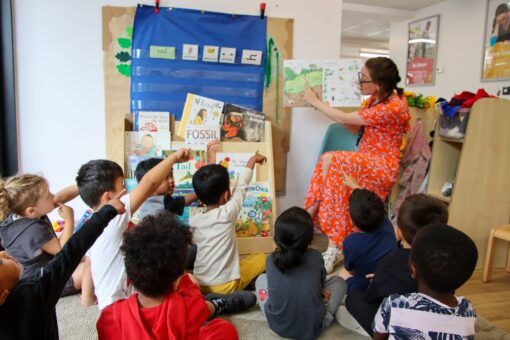
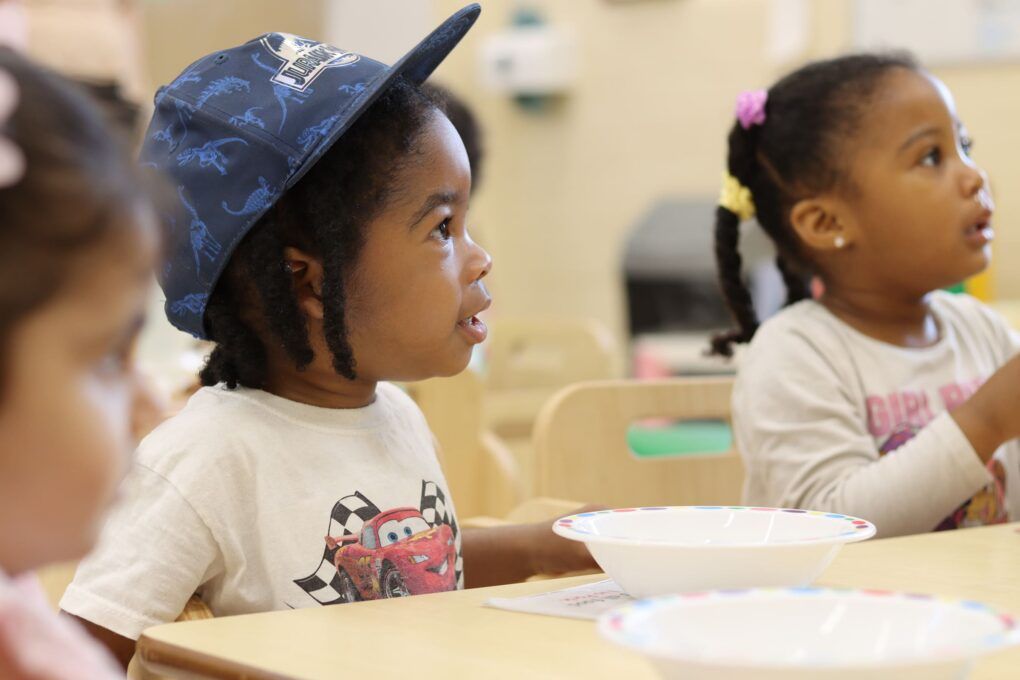
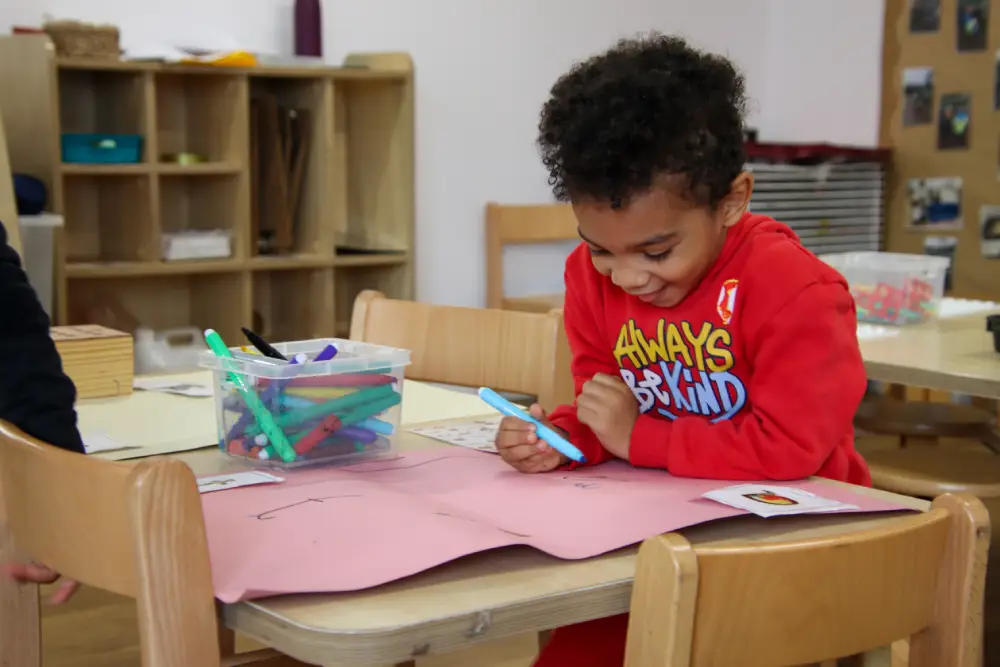
Our nurseries are so much more than childcare. They are environments where children grow braver, find their voice, make real friends, and leave ready for what comes next.
How to improve school readiness: strategies for Early Years
30 January 2025
Early years support plays a key role in preparing children for school. Discover some of the strategies we use at Ark Start to support school readiness.
Molly Devlin
Director of Early Years
Molly is Director of Early Years at Ark and runs Ark Start nurseries. She is passionate about providing quality education for young children and has worked in the early years for over 12 years – as a nursery headteacher, nursery manager, reception teacher, and as a primary school senior leader responsible for safeguarding, SEN, Early Years and early reading, including synthetic phonics to name a few.
She loves singing and storytelling and knows how fun and motivating it is for young children to learn more about the world through stories, songs and experiences. Originally from New Zealand, Molly enjoys spending as much time outdoors as possible and, in her spare time, she loves cuddling her cats.
The growing concern of school readiness
Today (Thursday) Kindred Squared published their annual report on ‘school readiness’.
Their survey found that one in three reception teachers and teaching assistants say that their pupils are not ready to start school.
At Ark, we are in the unique position of being both a nursery and a school provider. I’m the headteacher of Ark Start, responsible for our nurseries, as well as the network lead for early years responsible for supporting and advising the primary headteachers and their early years leads on early years provision within our primaries. So, I – like many of my colleagues across our five nurseries – have on the ground experience on both sides.
It’s obviously concerning that year on year, increasingly large numbers of teachers are saying that fewer and fewer children are ready for school.
Every child deserves to start school with the potential to fully thrive – and every parent has their child’s best interests at heart.
We need to work together to navigate the best way forwards.
What does ‘school readiness’ really mean?
It’s worth thinking about what school readiness looks like. The phrase will inevitably mean slightly different things to different professionals – and to different parents. The Ark Start aim is for all our children to begin reception feeling happy and confident in a room with 29 other children, being able to emotionally regulate themselves and being ready to engage with learning.
Why are more children struggling with school readiness?
Several factors contribute to the rise in school readiness concerns:
Pandemic-Related Developmental Delays: we know that some of the issues around a lack of school readiness are down to the pandemic. Too many children had limited access to early years services – leading to developmental delays and gaps, especially for children who had limited social interaction.
Parental Isolation: parents experienced significant isolation. Those who didn’t know what milestones their children should be meeting were cut off from the professionals and peers who could have informed them, and from the help they might otherwise have received.
Cost of Living Crisis: Financial stress and child poverty impact access to quality early years education and support services.
Increased Special Educational Needs (SEN): there are now increasing numbers of children starting nursery with additional needs, who have missed out on key interactions with health visitors and support services.
The importance of Early Years support
Early intervention is critical. The evidence shows that access to the right support and services at the right time makes all the difference. For example, Nuffield found Sure Start had huge long-term benefits for children’s health – at its peak, preventing over 13,000 hospitalisations of 11- to 15-year-olds each year.
It’s great ministers are now putting long overdue investment in early years. But we must make sure that investment is based on the evidence. Parents (and adults working with very young children) need a better understanding of child development, and we need to make sure parents get consistent advice, with services should be designed to support, not stigmatise, parents accessing help.
Early Years strategies to improve school readiness
So, how do we get there? At Ark Start we work hard to prepare children for school – with a curriculum and approach rooted in the evidence and with a clear focus on impact. The government target is for 75% of children to be at a ‘good level of development’ (GLD) by the end of their reception year. 88% of children going to school from Ark Start are achieving that already – despite coming from less privileged backgrounds – so our approach is working.
At Ark Start, we focus on:
Strong parent partnerships: We take our time to get to know families and work with parents. We do this through a combination of home visits, ongoing parent meetings and offering specific opportunities for parents to come in and discuss their child, their education and any barriers. We also offer stay and plays and parent support to encourage parents to support and learn from each other.
Flexible, free nursery hours: A key element of Ark Start is that children can access all their funded hours for free, in a flexible way. Parents might choose to use their hours during the school term only or spread them out throughout the entire year. For example, instead of 15 hours a week for 38 weeks, they could choose to use 12 hours a week all year round.
A research-based curriculum: It’s clear that nurseries now need to be more than childcare settings, and deliver really high-quality education. Children experience rapid brain development during their formative years. Missing key milestones at this age significantly impacts on their lifelong learning. So, we work from a curriculum that has been designed by early years specialists to avoid this. Our staff all have a thorough understanding of child development and are trained to know how best to work with under-fives to ensure they can all learn to the best of their abilities.
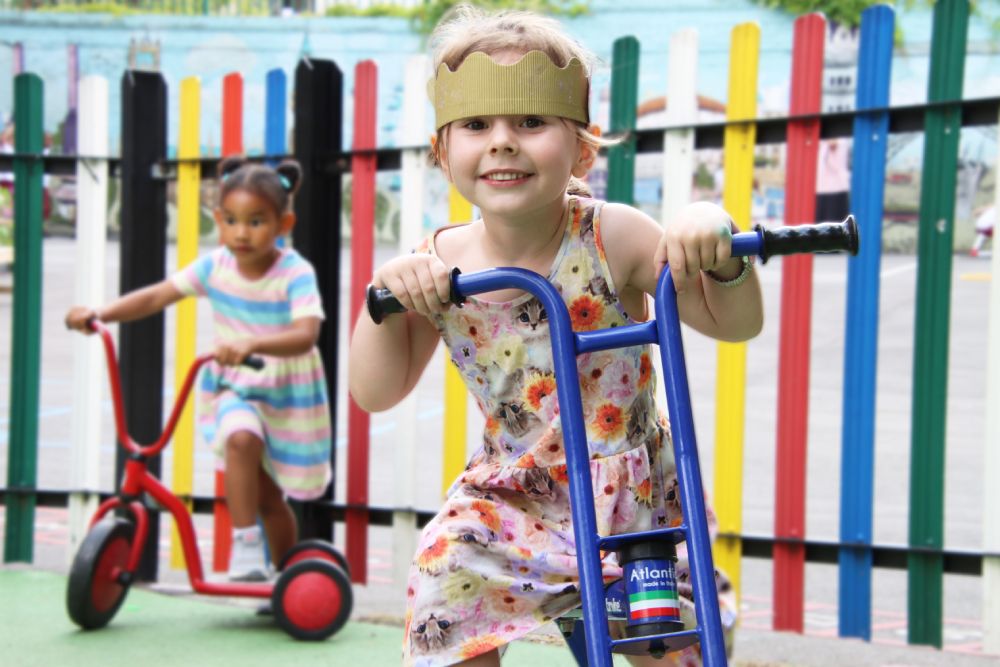
Screen-free, outdoor learning: Our nurseries are all ‘screen free’ and we encourage outdoor play and learning, to help build the physical and emotional resilience that is such an important part of ‘big school’ life.
Smooth transition to school: We also take simple but important practical steps to ease that transition from nursery to reception. That means talking to children about school routines and introducing them to teachers where we can. And we work closely with parents so they know what the expectations will be around their children’s attendance, behaviour and so on.
The way forward
With the government now focused on early years, there’s every opportunity now to fix this. So, let’s seize this moment and work together to give all children the chance to succeed and flourish at school.